Author: Lee, Seok-Woo

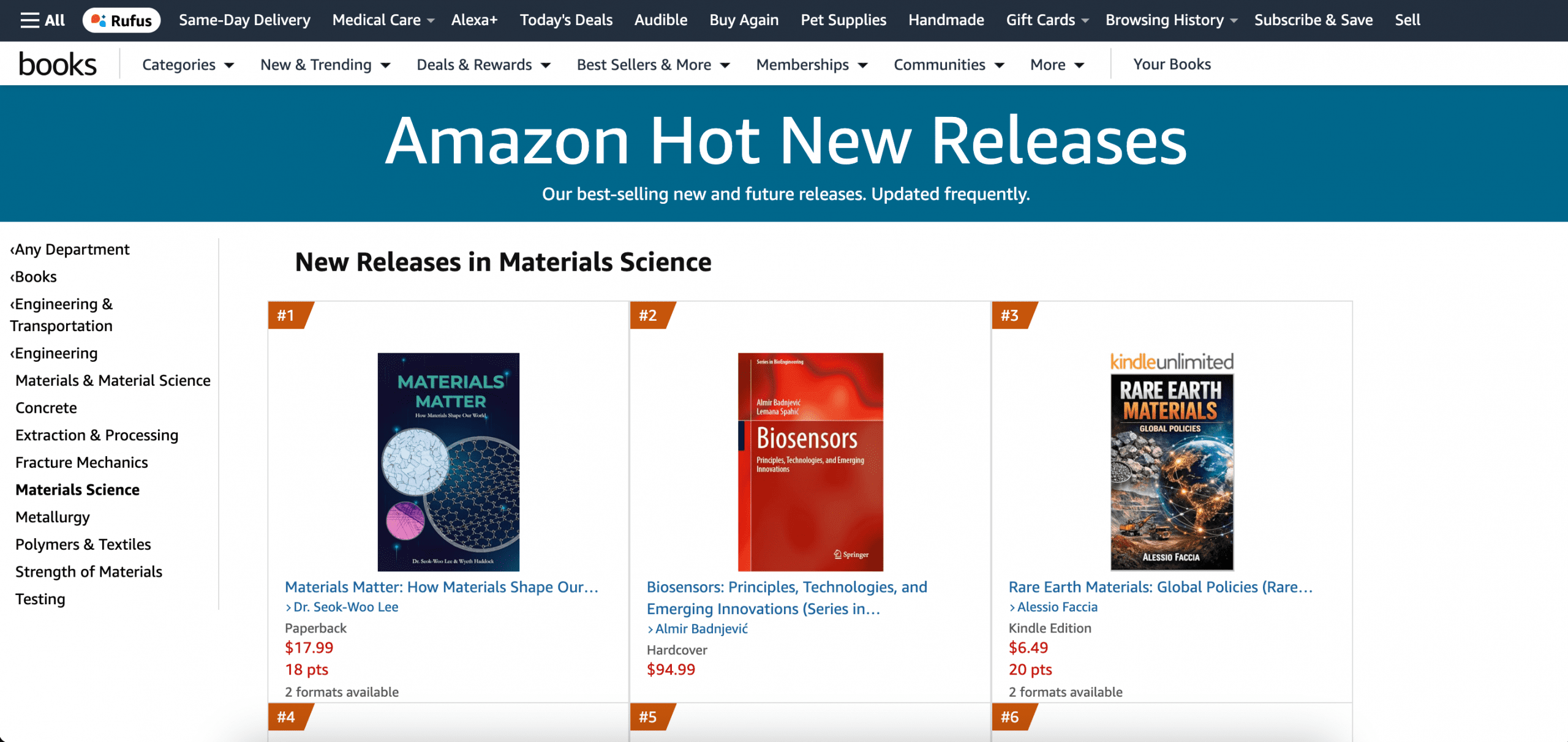
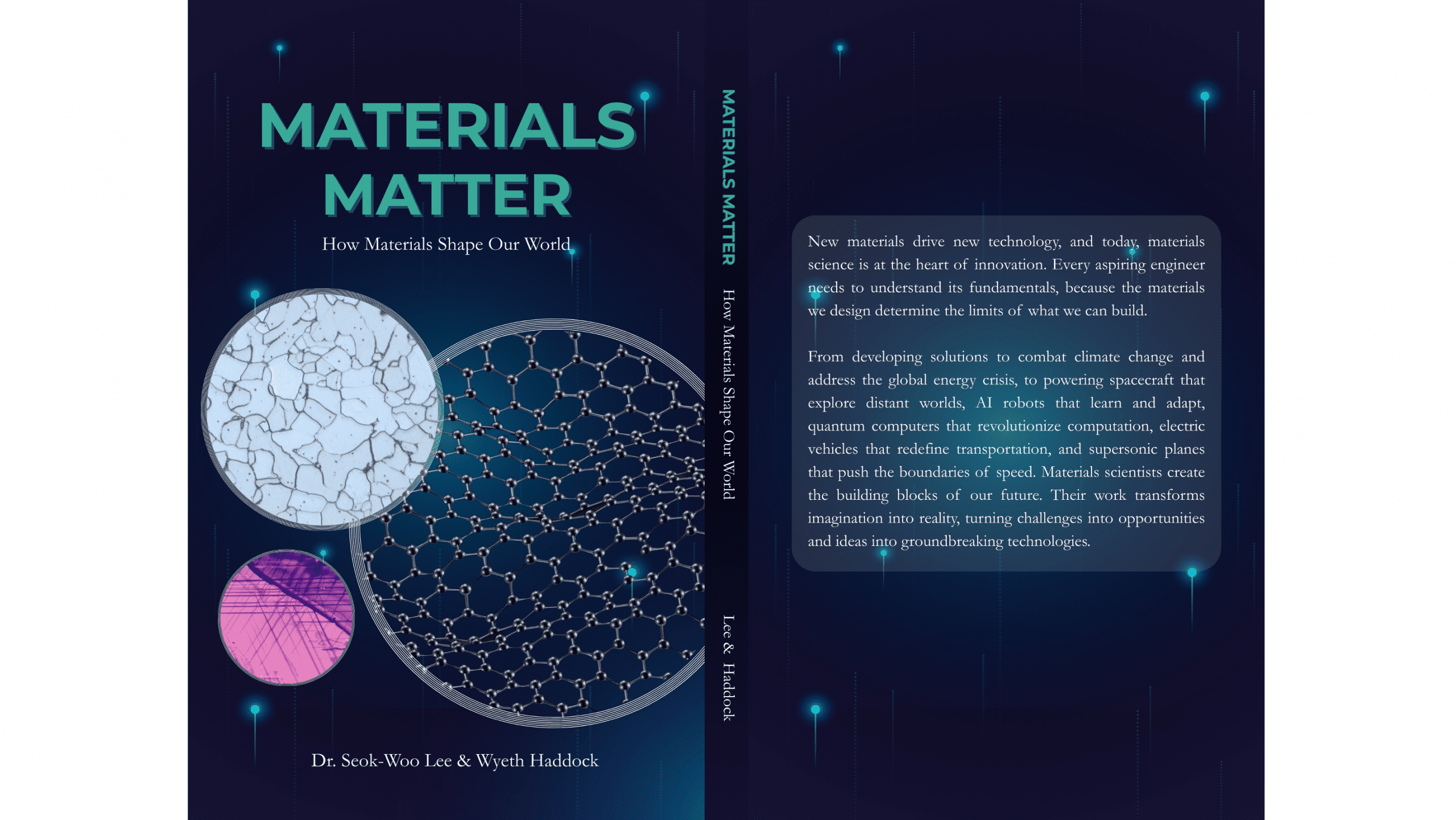
Seok-Woo and Wyeth published a New Book, “Materials Matter: How Materials Shape Our World”!

I’m pleased to share that I’ve just published a new book, “Materials Matter: How Materials Shape Our World”, now available on Amazon in both paperback and eBook formats: [Amazon (both paperback and eBook)]

This book is an updated and expanded version of my previous self-published title, Make Materials That Change the World: Materials Science!. For this new edition, a senior undergraduate student in Materials Science and Engineering at the University of Connecticut, Wyeth Haddock, joined the project as a co-author and contributed several new chapters.

The book is designed to introduce materials science to high school seniors and first-year undergraduate students. Last year, I met several undergraduate readers of an earlier edition who went on to switch their major to Materials Science and Engineering after reading my book—clear evidence that it made a real impact!

If you’re looking for an accessible, high school–level book to introduce materials science to younger students, I hope this book becomes a valuable and inspiring resource. Thank you for your continued support—and I would truly appreciate it if you shared this with colleagues, educators, or students who might be interested.

– Seok-Woo Lee

PS) One New Chapter includes ‘DIY Bubble Raft Experiments’. You can enjoy some beautiful photo and videos (bubble nanowire and dislocation plasticity) at my group webpage, too.


Alex passed his proposal defense! Many Congrats!

Alex passed his proposal defense! Many Congratulations!

His research title is “Mechanical hysteresis behavior of ThCr2Si2-structured intermetallic compounds“.

Proposal Abstract: The intermetallic compound CaFe2As2 belongs to the ThCr2Si2-structured compounds and is part of the family of iron-based superconductors, and the recent discovery of superelasticity and a cryogenic shape-memory effect has opened possibilities for its use as a structural material. To employ the compound in practical settings and ensure its reliable implementation into devices, its mechanical properties must be thoroughly understood.
The structure of CaFe2As2 is highly anisotropic, with the c-axis nearly three times longer than the a-axis, and exhibits body-centered tetragonal (T), orthorhombic (O), and collapsed tetragonal (cT) phases depending on temperature and pressure. Micropillar compression and nanoindentation are suited for studying these crystals. At modest c-axis compression exceeding ~0.7 GPa, CaFe2As2 undergoes a phase transition from the T to the cT structure, forming As-As bonds and producing up to 13.4% recoverable strain. Below 40 K, the collapsed state can be maintained even after unloading, but the temperature increase can break As-As bonds, leading to the length recovery. So, it exhibits the linear shape memory effect. Stress-strain curves also showed mechanical hysteresis during c-axis cycles due to the different stress level required for making and breaking As-As bonds.
In our preliminary study, we conducted nanoindentation along both c- and a-axis. We confirmed that c-axis nanoindentation exhibits the mechanical hysteresis as a micropillar showed. However, a-axis nanoindentation also showed the mechanical hysteresis, and the area of the hysteresis loop is even larger. This result was surprising because As-As bonding does not occur under a-axis loading. CaFe2As2 behaves like a lamellar material due to the extremely low critical resolved shear stress in the (001)[100] system. Layered materials such as graphite, MAX phases, and LPSOs exhibit mechanical hysteresis associated with kink formation, dislocation motion, or ripplocations under in-plane indentation. Transmission Electron Microscopy revealed high-angle kink boundaries formed by dense dislocation arrays, with mobile dislocations trapped between them. Dislocation Dynamics simulations confirmed that back stress from stable kink boundaries likely causes a Bauschinger effect, which produces the mechanical hysteresis loop. Thus, a-axis nanoindentation induces the mechanical hysteresis via the completely different mechanisms from c-axis nanoindentation.
Growth of CaFe2As2 in different solutions (Sn or FeAs) and the subsequent heat treatment can create a variety of microstructure. Ca atoms can also be replaced by Sr or Ba, so it is possible to control the atomic size. Thus, future work will examine samples with varied microstructure and composition to uncover effects of interlayer spacing and bonding strength. Once all these works are completed, we will be able to get fundamental insight into the anisotropic mechanical hysteresis behavior of CaFe2As2, and the results will be applicable to other ~1500 ThCr2Si2-structured compounds.

Zack passed his proposal defense! Many Congrats!

Zack passed his proposal defense! Many Congratulations!

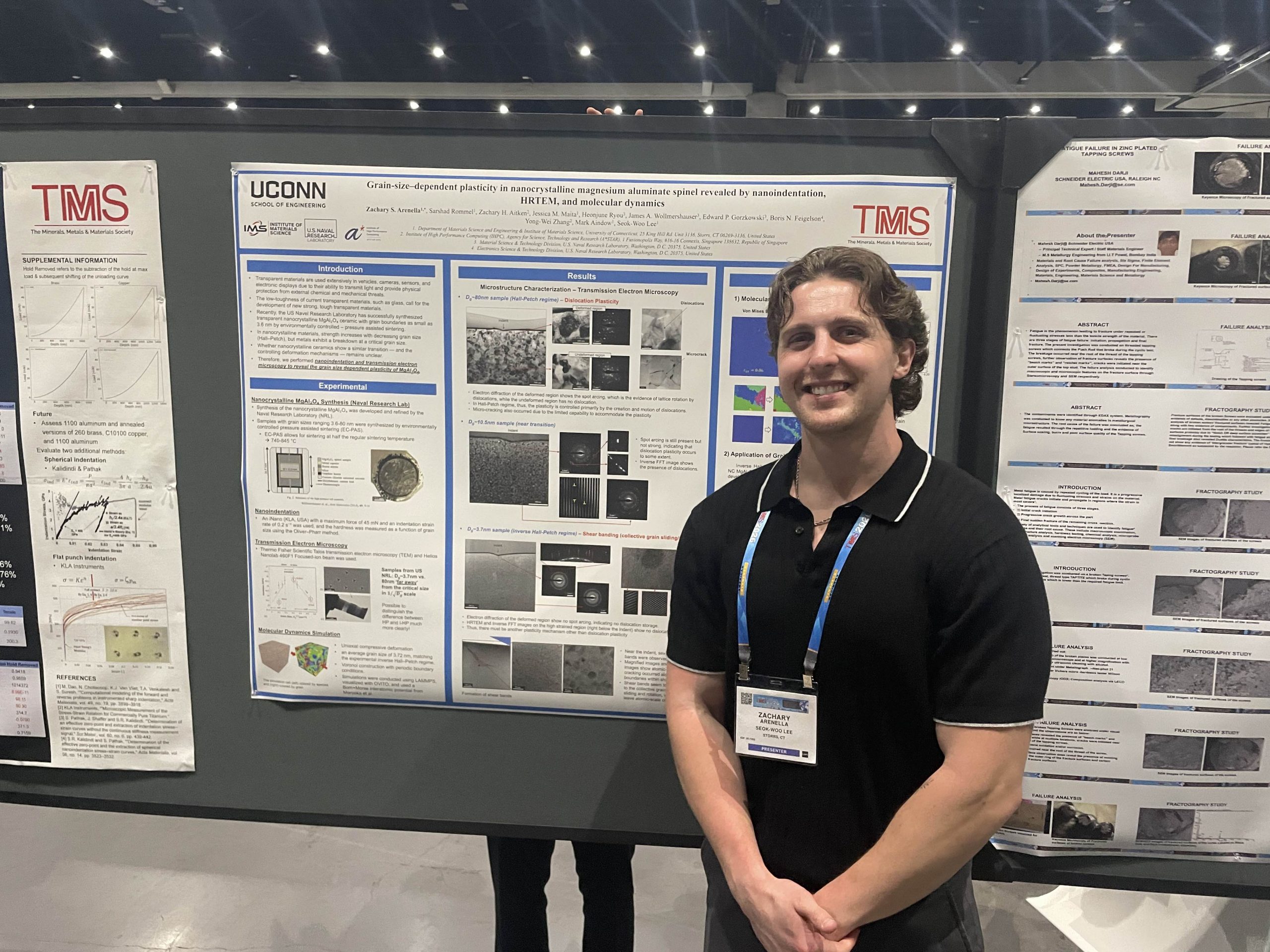
His research title is “Micromechanical Studies on Deformation and Fracture Mechanisms of Nanostructured Materials.

Proposal Abstract: The demand for lightweight, high-strength, and cost-effective transparent materials is growing rapidly, particularly for use in military vehicles, marine vessels, electronics, and sensor systems. Recent progress in the synthesis of transparent nanocrystalline ceramics has positioned them as a superior alternative to traditional glass, primarily due to their outstanding mechanical properties and high temperature stability (no glass transition).

In this study, nanocrystalline magnesium aluminate spinel (NC-MAS) with grain sizes from 3.7 to 80 nm was synthesized using environmentally controlled, pressure-assisted sintering. Nanoindentation measurements revealed a transition from the Hall–Petch to the inverse Hall–Petch regime, which was examined using two representative grain sizes—80 nm and 3.7 nm—chosen to avoid overlap in deformation mechanisms. Electron microscopy showed that the 80 nm material deforms through dislocation activity and grain-boundary decohesion, whereas the 3.7 nm sample exhibited no dislocations and instead deformed through grain-boundary sliding, decohesion, and shear banding. Atomistic simulations confirmed that grain-boundary-mediated plasticity dominates in the inverse Hall–Petch regime, with no dislocation activity or stress-induced grain growth even at large strains.

Because fracture behavior is critical for the performance of ceramic materials, the proposed research aims to determine how grain size and the associated deformation mechanisms influence crack-tip plasticity and fracture toughness in NC-MAS. The future work will integrate micro-cantilever bending, nanopillar compression, advanced electron microscopy, constitutive modeling, and atomistic simulations to uncover how dislocation plasticity and grain-boundary-mediated shear banding alter crack-tip processes and energy dissipation. The resulting framework will not only clarify how grain size governs fracture resistance in NC-MAS but will also extend to other brittle nanostructured materials, enabling predictive models for designing next-generation, damage-tolerant ceramic components.

Lee, Seok-Woo

Kyle passed his proposal defense! Many Congrats!

Kyle passed his proposal defense! Many Congratulations!

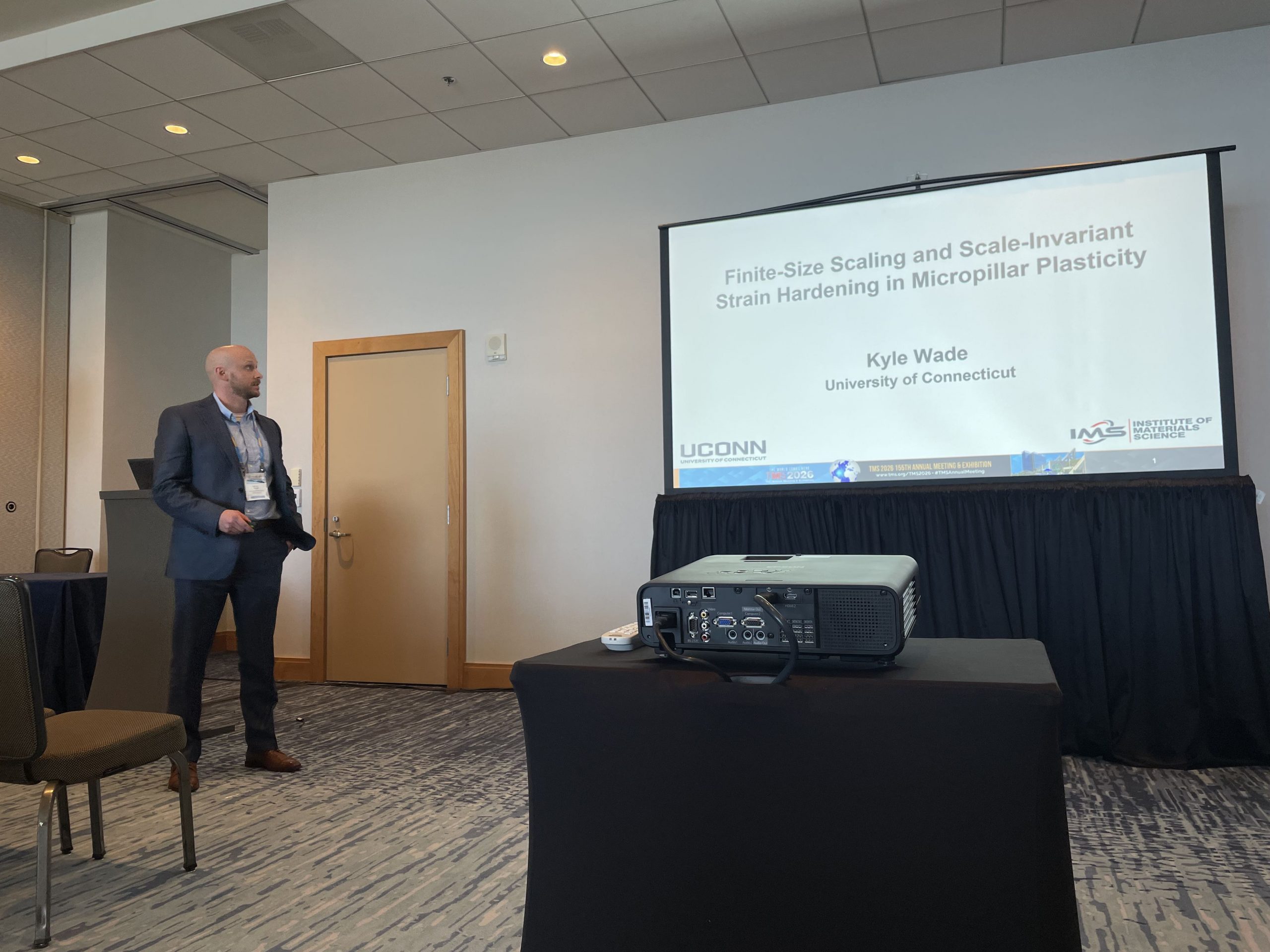
His research title is “Unifying Size-Dependent Dislocation Plasticity at the Microscale Using a Finite-Size Scaling (FSS) Framework“.

The aim of the proposed research is to analyze size-dependent dislocation plasticity using FSS concepts to provide a unifying framework that describes size-dependent plasticity at the microscale. This methodology allows for the systematic characterization of strain hardening and provides a model to estimate flow stress beyond the yielding limit. Moreover, the FSS framework enables the generation of stress-strain curves for micropillars of different sizes, allowing prediction of a statistically averaged response across a broad microscale size range. Beyond the scientific significance of the phenomena, size-dependent plasticity is also directly relevant to technologies operating at micron and nano scales, including micro- and nano- electromechanical systems (MEMS and NEMS), nanostructured thin films, irradiated materials, and additively manufactured materials with fine-scale microstructures. The results of this work will provide important insights into the fundamental understanding of dislocation plasticity, as well as a powerful predictive tool for designing micro-/nano-scale devices with reliable performance.

Wyeth’s research was featured in UConn Today! Congrats!

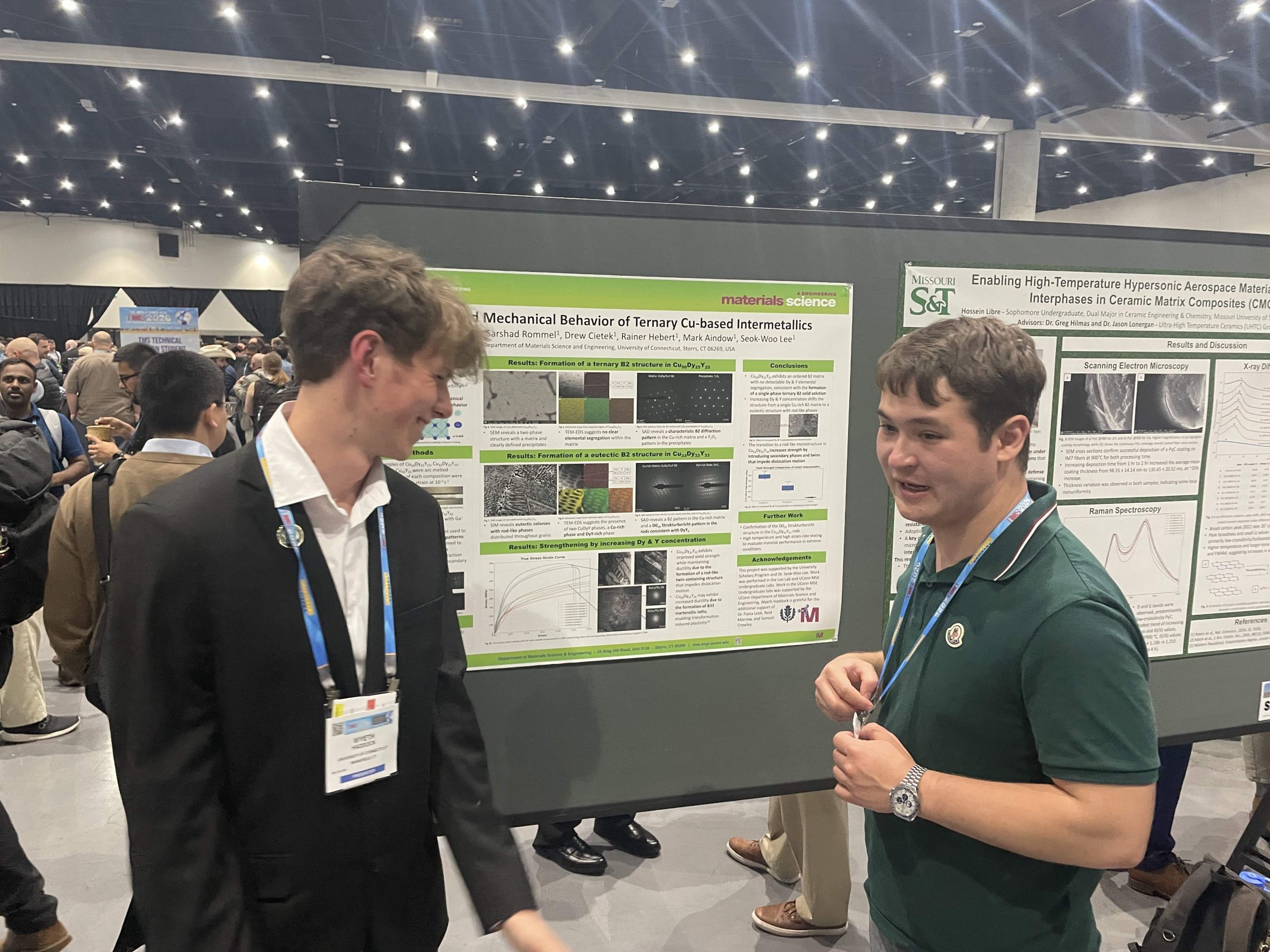
Our undergraduate researcher (also, University Scholar)’s research was featured in UConn Today. He is currently studying the ternary B2 structured Cu-Dy-Y alloys with the high strength and enhanced ductility for space applications (low temperature environment). The deformation mechanisms (dislocation plasticity + twinning + martensitic transformation) of this new material system has not been understood. Wyeth is trying to create and characterize this new material system and to search for a way to improve the low temperature ductility.

UConn Today news article can be found below:

Three CoE Students Pursue In-Depth Research Projects as University Scholars

Lee receives the funding from DOE-BES!

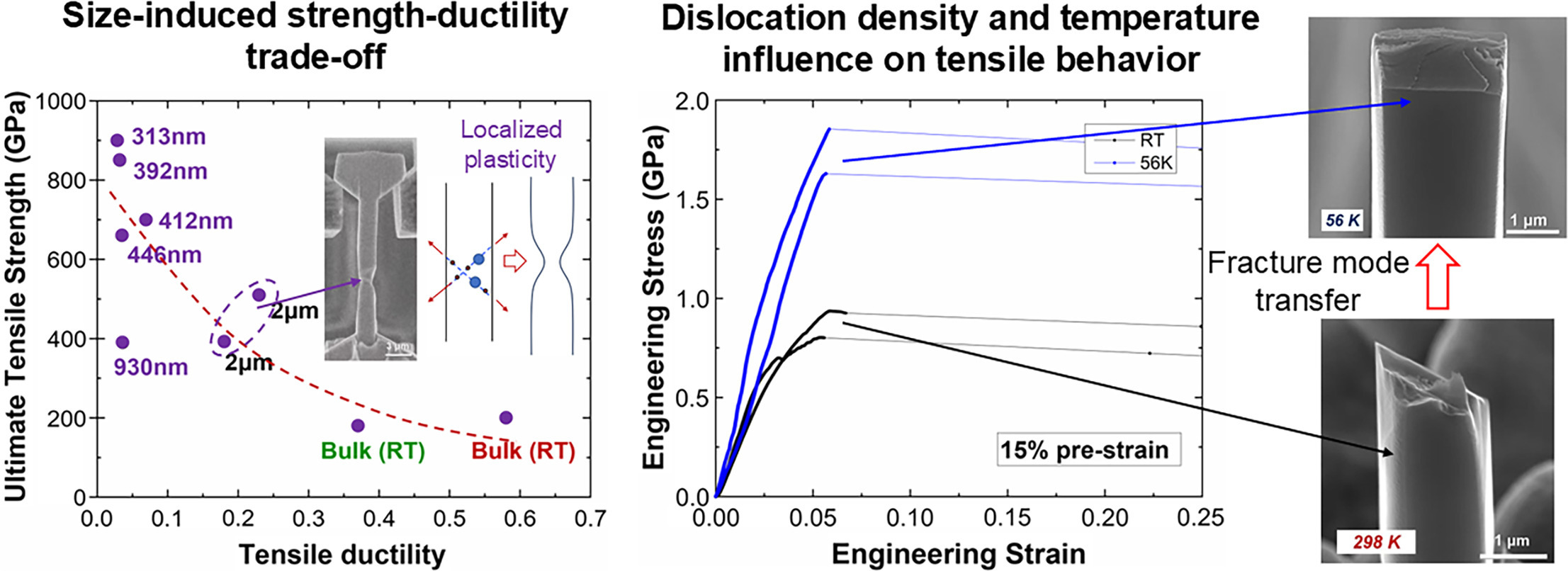
Lee receives the funding from DOE-BES ($130,000) for the next two years. This funding is the continuation of our research on micro-mechanical characterization of single crystalline metals under different environments (primarily, cryogenic environments). This study will focus on how sample dimension and temperature influence the size-dependent strength and tensile ductility. We will also develop a new mathematical model that can predict a size-dependent stress-strain curve using the finite-size scaling theory and the scale-free intermittency statistics.

P&W supports our nanomechanical studies of Ti alloys!

We just started to collaborate with Pratt & Whitney to investigate the mechanical properties of grain boundaries of Ti alloys ($30,000)! This new project will study (1) how diffusion bonding influence the mechanical behavior of grain boundaries (impurity segregation and abnormal growth of weak beta-phase) and (2) how the mechanical behavior of twist boundary is affected by the misorientation and the imposed strain rate. Understanding of mechanical behavior of grain boundary will be crucial for the improvement of fatigue resistance of Ti alloys.

We received the 2025 UConn Research Excellence Award!

Lee received the 2025 UConn Research Excellence Award with Prof. Mark Aindow ($50,000)! This research will focus on the nanomechanical and microstructural characterization of nanoporous amorphous carbon materials with the lightweight, high strength, and high ductility. Our initial work was published at Nature Communications in 2024 and studied the unimodal pore structures. Materials are fabricated by Prof. James Watkins group at UMass Amherst.

  • Zhongyuan Li, Ayush Bhardwaj, Jinlong He, Wenxin Zhang, Thomas T. Tran, Ying Li, Andrew McClung, Sravya Nuguri, James J. Watkins, Seok-Woo Lee, “Nanoporous amorphous carbon nanopillars with lightweight, near-theoretical strength, large fracture strain, and high damping capability,” Nature Communications 15, 8151 (2024)  [PDF.pdf][web]

This new project will focus on the influence of various pore distribution (size and number) on mechanical properties. Also, this work will include the fabrication and characterization of bulk-scale nanoporous amorphous carbon materials. This work will enable us to create a new class of structural materials.

Alex and Kyle gave the oral presentation in TMS 2025 (Las Vegas)!

Alex and Kyle gave the oral presentation in TMS 2025 (Las Vegas)!

Kyle Wade (former MS. Student): Microstructural and micro-mechanical characterization of isothermally heat-treated  Al6061 cold spray deposit

Alex Horvath (PhD student): A Large Hysteresis Behavior in CaFe2As2 Single Crystals via the Bauschinger Effect associated with Buckling-Induced Formation of Nanocrystalline Structure